

You can quote Scripture and still feel disconnected from God. You can pass a Bible trivia test and still miss His presence in your life. Here's the secret: there's a massive difference between knowing about God and actually knowing God. And that difference changes everything.
Deepen Your Understanding 📚
Explore this article interactively with MyBibleIQ's NotebookLM Studio. Listen to an AI-generated podcast version, view interactive slides, or chat with the content to ask follow-up questions about knowing God.
[Launch Interactive Experience]
The Trap of "Knowing About" Instead of "Knowing"
You've probably experienced this: You sit down with your Bible, read a passage about God's faithfulness, feel inspired for about 20 minutes, then life happens and you're back to wondering if God actually cares about your specific struggles.
Here's what's happening: You're getting biblical information without a biblical relationship.
Most of us grew up in a version of faith that looked like this: Attend church, listen to the sermon, maybe memorize some verses, feel good about God, go home until next week. We accumulated information—lots of it. But somewhere along the way, we missed the actual relationship.
What's the difference between knowing God and knowing about God?
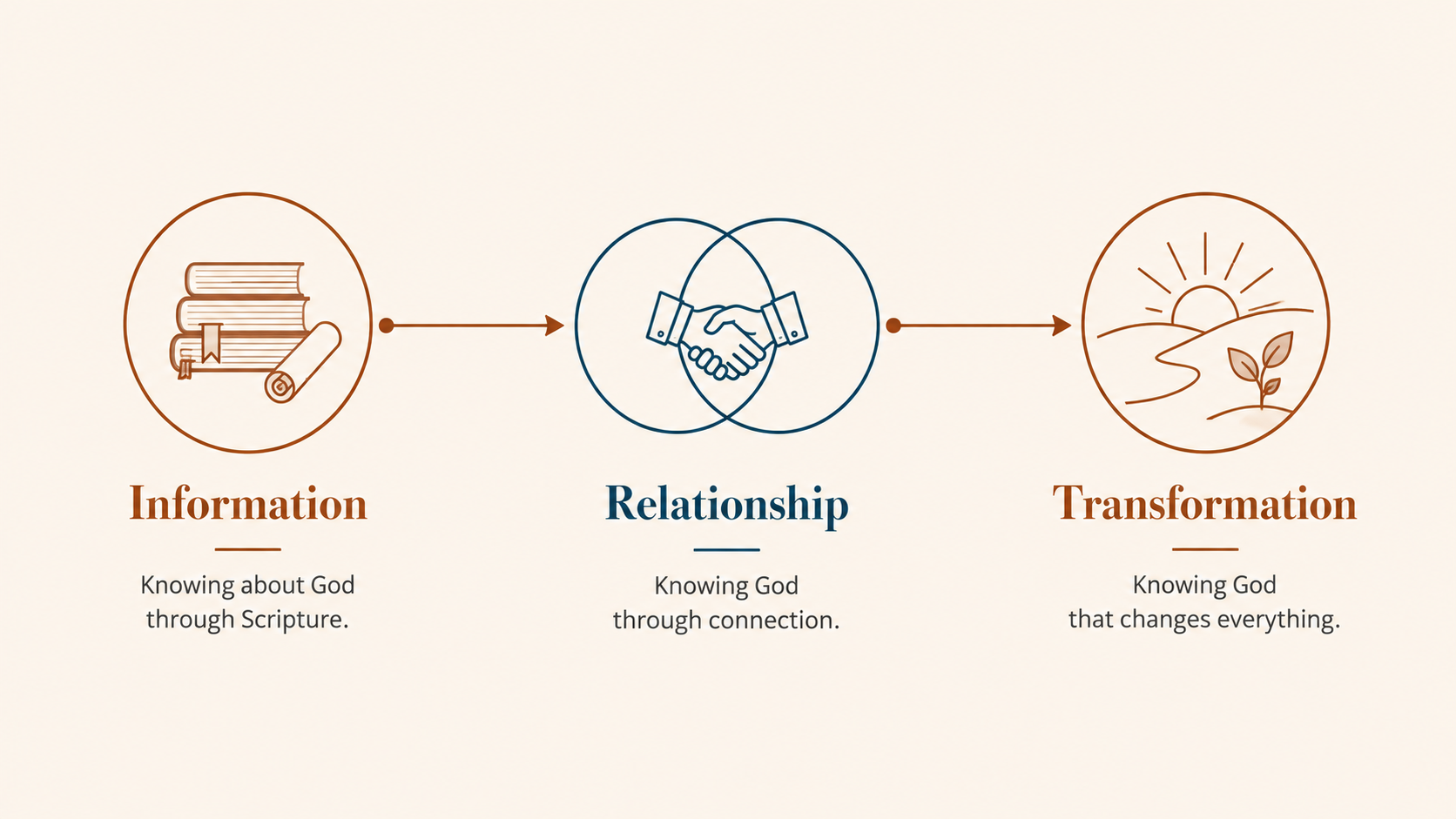
Knowing about God means understanding facts—doctrine, Bible stories, theology. Knowing God means having a personal relationship with Him through that content. You can know Bible facts and still feel disconnected from God. But when you study Scripture intentionally and let it reshape how you see God's character, your entire life transforms.
Think about it: You can know everything about someone without actually knowing them. You can memorize a celebrity's filmography and biography without having any real connection to them. The knowledge is real. The relationship is not.
This is exactly what happens when we approach the Bible like homework instead of a love letter. We get the facts but miss the intimacy. We collect verses but don't encounter the God behind the verses.

Why Biblical Literacy Isn't About Passing Tests
MyBibleIQ was built on a core belief: Biblical literacy matters, but not for the reasons you think.
It's not about memorizing chapter-and-verse references so you can win trivia night. It's not about being able to recite theology to impress people. It's about building a real, transformative relationship with God through intentional engagement with His Word.
What is biblical literacy, really?
Biblical literacy is the ability to understand Scripture in its historical and cultural context—and more importantly, to let it transform how you see yourself, others, and God. It's reading the Bible and having it speak directly to your actual life. MyBibleIQ's gamified approach to biblical learning makes this happen through interactive quizzes, flashcards, and narrative quests that keep you engaged.
Here's what changes when you move from "knowing about God" to actually knowing God:
- You trust differently. When panic hits, you're not just reciting verses you memorized. You're remembering the God who kept His promises for thousands of years, and thinking, "If He's faithful then, He's faithful now."
- You love differently. When you read about God's relentless love for broken people, it rewrites how you love others. You get less judgmental and more merciful because you're experiencing the mercy you read about.
- You decide differently. Instead of following rules because you're supposed to, you start making choices because you know God and you want to stay close to Him.
- You belong differently. Knowing God isn't just about personal spirituality—it's about being part of His story across thousands of years. You're not alone.
John 17:3 (NASB): "This is eternal life, that they may know You, the only true God, and Jesus Christ whom You have sent."
Notice Jesus doesn't say "know about" God. He says "know" God. There's a reason that distinction matters.
The Hidden Stories That Reveal God's Heart
One of the best-kept secrets in Scripture is this: The most powerful stories about God are often the ones nobody talks about.
Everyone knows the story of David and Goliath. Most people know the story of Jesus feeding 5,000. But how many people know the story of Jephthah? Or Judah and Tamar? Or the messy, uncomfortable accounts where God's people fail spectacularly and God shows up anyway?
Why does MyBibleIQ focus on lesser-known Bible stories?
Lesser-known stories like Jephthah and Judah & Tamar are profound because they're real. They're not sanitized. They show God's redemptive presence even in messy, complicated human situations. When you engage with these stories, you learn that God's love isn't just for the "good" people—it's for broken people making mistakes, and that changes everything about how you see yourself and God.
These are the stories MyBibleIQ's quest system is built around—not the famous ones, but the ones that reveal something raw and real about God's character. When you study these stories intentionally, you start seeing yourself in them. You realize that God's love isn't conditional on your performance.
That's when knowing about God becomes actually knowing God.
From Head Knowledge to Heart Transformation
Here's the hard truth: You can be incredibly knowledgeable about Scripture and still have a heart that's far from God.
Jesus spent His entire ministry dealing with this. The Pharisees knew Scripture better than anyone. They could cite every law, every regulation, every restriction. But Jesus said their hearts were far from God. Why? Because they had memorized the rules without encountering the God behind the rules.
How do I move from just understanding the Bible to actually encountering God through it?
Stop reading the Bible to finish a chapter. Start reading to encounter God. Ask real questions: What is God revealing about Himself here? How did He show up for this person? What does this tell me about His love? Then let those answers reshape how you live. This is where interactive biblical learning—like quizzes and flashcards that test your actual understanding—becomes powerful. It forces you to engage deeply instead of skimming.
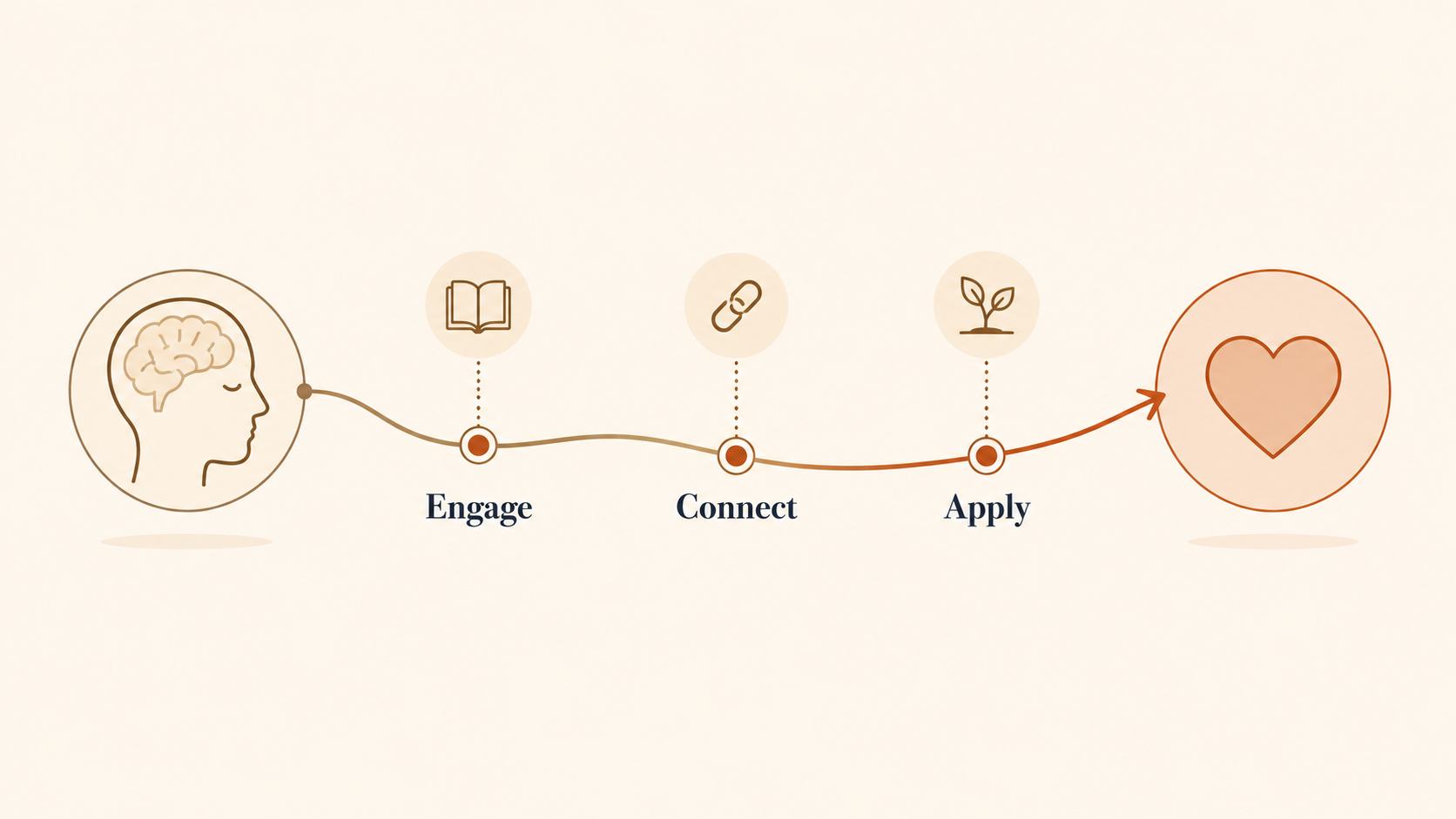
The shift from head knowledge to heart transformation happens when three things align:
- You engage intentionally – Not just reading, but wrestling with what you read
- You connect it to your life – Asking "What does this mean for me, today?"
- You let it change you – Actually applying it, not just filing it away as information
This is why MyBibleIQ gamifies biblical learning. Because interactive practice—answering questions about the quests you've read, remembering theological insights, engaging with flashcards—moves the Bible from your head into your heart.
What Actually Knowing God Looks Like
When you know God—not just facts about God, but His actual character through His Word—your life shows it.
You have a different kind of peace. Not the absence of problems, but peace in the problems because you know someone who's bigger than them.
You have a different kind of love. Not sentimentality, but genuine mercy for broken people because you recognize yourself in them.
You have a different kind of hope. Not wishful thinking, but confidence that's grounded in thousands of years of God's faithfulness.
If I build biblical literacy through MyBibleIQ, will it automatically change my life?
Knowledge alone doesn't transform you—response does. MyBibleIQ gives you the knowledge through interactive quizzes, quests, and flashcards. But you have to let it challenge you. You have to ask how each truth applies to your actual struggles. You have to decide to live differently because of what you're learning. The app makes biblical literacy possible; your response makes it transformative.
Here's the beautiful part: You don't need to be perfect to know God. You don't need to have everything figured out. Abraham doubted. Moses complained. David sinned. Thomas questioned. And God loved them all the same.
Knowing God isn't a destination you arrive at. It's a relationship you grow into. And it starts the moment you stop trying to impress God with your knowledge and start actually listening to what He's trying to tell you through His Word.
Your Next Step: Stop Studying About God and Start Knowing Him
You don't need more information about God. You need more intimacy with God.
Pick one story from Scripture this week. Read it. Don't rush. Ask: What is God actually like based on this story? How did He show up? What's He trying to tell me? Then sit with the answer. Let it sink in. See how it changes the way you see yourself and your situation.
This is biblical literacy. Not trivia. Not performance. Relationship.
Ready to know God more deeply?
Join the MyBibleIQ waitlist for early access to the platform that's designed to build biblical literacy through interactive engagement with Scripture. October 1st launch.
Frequently Asked Questions About Knowing God
What does it mean to "know" God versus "know about" God?
Knowing about God is theological understanding—facts, doctrines, Bible stories. Knowing God is a personal relationship—experiencing His presence, His character, His love in your actual life. You can know facts and miss the relationship entirely.
How do I start knowing God if I've only known about Him?
Begin with intentional, personal engagement. Read Scripture asking "What is God revealing about Himself here?" and "How does this connect to my life?" Let the Bible challenge you, not just inform you. MyBibleIQ's interactive approach helps by making engagement active rather than passive.
Why is biblical literacy important if knowledge alone doesn't transform us?
Biblical literacy is the foundation. You can't have a real relationship with God without understanding His Word. But literacy is the beginning, not the end. It's the knowledge that enables the relationship. MyBibleIQ builds literacy through gamified learning so understanding becomes natural and memorable.
What if I've failed God or done things I'm ashamed of?
Actually read the Bible stories about the people God used. Judah slept with his daughter-in-law thinking she was a prostitute. David committed adultery and murder. Peter denied Jesus three times. And God didn't abandon them. This is what knowing God means—experiencing that His love isn't based on your performance.
How does MyBibleIQ help me know God better?
MyBibleIQ gamifies biblical learning through quests (narrative stories), quizzes (testing understanding), and flashcards (reinforcing theological insights). By engaging interactively with Scripture, you build biblical literacy faster and retain what you learn better. And that knowledge becomes the foundation for actual relationship with God.
Is it okay to have doubts about God?
Yes. Thomas doubted. Job questioned God extensively. The Bible is full of honest prayers from people wrestling with God. Doubt isn't the opposite of faith—it's often the beginning of deeper faith. God welcomes your real questions.
How long does it take to actually know God?
Knowing God is a lifetime journey, not a destination. But you can start experiencing real relationships immediately by engaging intentionally with Scripture and letting it challenge you. Biblical literacy accelerates this through consistent, structured learning.